
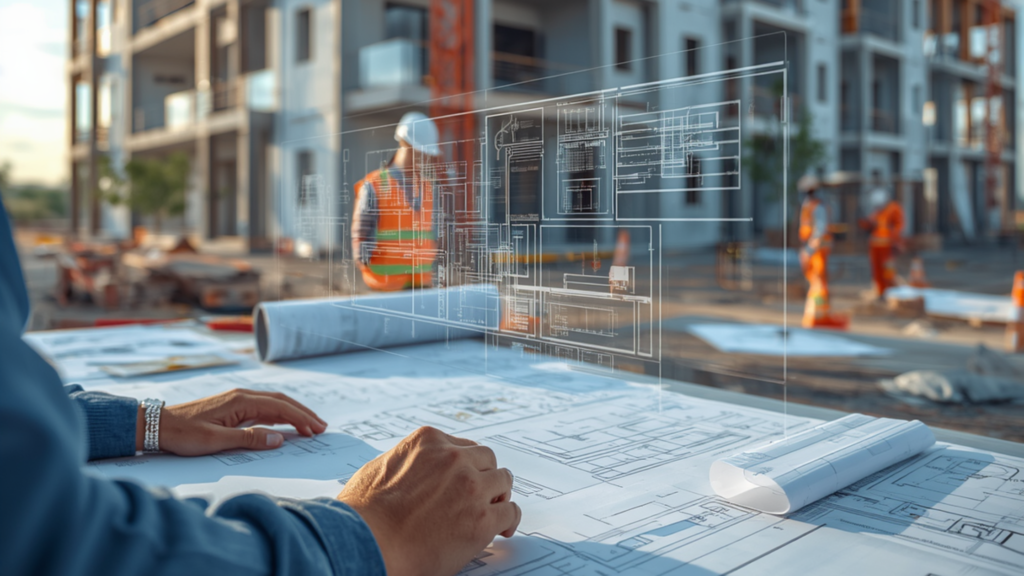
Construction projects involve countless moving parts. From groundworks and structural works to mechanical systems and finishing trades, every stage must be carefully coordinated to keep the project on track.
At Process Control Services UK Ltd (PCS), we often see projects where electrical considerations are pushed down the priority list until construction is already underway. While this may seem manageable at first, leaving electrical design until the later stages can create unnecessary challenges that affect budgets, programmes and overall project delivery.
Here are five risks that construction teams should consider.
1. Design Clashes Become More Difficult to Resolve
When electrical requirements are identified late, they often compete for space that has already been allocated to other services.
Cable routes, containment systems, control panels, and distribution equipment all require careful planning. If these requirements are introduced after other elements have been installed, redesign work may become necessary.
In some cases, contractors are left trying to find workarounds rather than implementing the most effective solution.
2. Project Delays Can Quickly Escalate
Construction schedules are often tightly managed.
Late design decisions can affect procurement, installation sequencing, and commissioning activities. Even relatively small changes may create knock-on effects for multiple trades working on site.
This is one reason why many developers are placing greater emphasis on electrical design for construction projects in the UK during the early planning stages rather than waiting until installation work is about to begin.
3. Costs Are Often Higher Than Expected
Late-stage design changes usually come with a hefty price tag. Extra labour, swapped materials, revamped cable routes, and delays. All of these boost costs dramatically.
This is ironic because these fixes were simple early on, but are now pricey since they are happening during construction. Therefore, planning upfront allows teams to make wise decisions while everything is still just on paper, not when the project’s already built.
4. Future Building Requirements May Be Overlooked
Construction projects are often designed to serve a building for many years.
Electrical systems need to support not only current operational needs but also future expansion, changing technologies, and evolving user requirements.
When electrical planning is rushed, opportunities to accommodate future growth can easily be missed. This may leave building owners facing avoidable upgrade works only a few years after completion.
Taking a longer-term view during the design process can help ensure that infrastructure remains practical and adaptable as operational demands change.
5. Commissioning Becomes More Challenging
The final stages of a construction project are often the most demanding.
As deadlines loom, contractors rush to finish installations, conduct tests, and get systems ready for handover. Unresolved electrical design issues make commissioning way more complicated.
Missing information, last-minute changes, and incomplete coordination cause delays, making project completion harder.
By integrating electrical design and installation in the UK from the outset, project teams can reduce uncertainty and support a smoother transition from construction to operation.
Why Early Planning Delivers Better Outcomes
Electrical systems are essential to the success of today’s construction projects. They keep everything running, from basic operations to safety features and communication networks, and even allow for future upgrades.
When electrical design is pushed to the back seat, it creates unnecessary risks that delay the project timeline and compromise how well the building performs later.
That’s why at PCS, we partner up with construction teams from the get-go. We make sure to tackle design needs early, keep costs under control, and ensure the buildings are equipped to handle whatever’s on the horizon.
Good electrical planning isn’t just about meeting requirements. It’s about smoothing out project progress and setting things up so the building stays reliable way beyond its initial completion.
For more information, please contact us at 01298 79969 or email us at sales@pcsukltd.co.uk.