
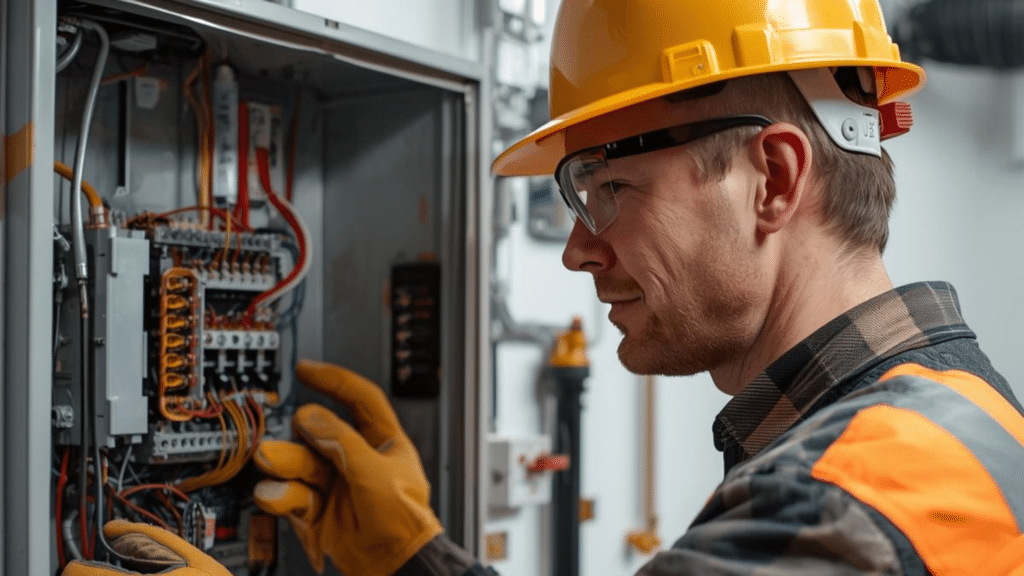
Electrical systems rarely fail in a dramatic fashion. Most problems start small, wear down quietly, and only show themselves when an inspection uncovers the weak link. That is the real purpose of our electrical testing and inspection across the UK at Process Control Services UK Ltd (PCS).Our team is trained inspotting early-stage faults before they lead to downtime, safety issues, or expensive repairs.
Here’s what usually breaks first, why it happens, and what that means for your site.
- Loose Connections
This is the number one issue that inspectors come across.
Over time, terminals and fixings loosen due to vibration, temperature changes, and general wear. A loose connection increases electrical resistance, which creates heat. Eventually, that heat begins to damage the cable, insulation, or nearby components.
A single loose screw can serve as the flashpoint of overheating, arcing, and possibly fire. Visible signs rarely show up until the system is already stressed, which is why inspections catch it earlier than anyone on the ground could.
2. Insulation Breakdown
Insulation is designed to keep current exactly where it should be. In reality, it decays slowly. Many inspectors find insulation that is cracked, brittle, discoloured or thinning due to:
- Ageing
- Heat exposure
- Oils, moisture, or chemicals
- Mechanical rubbing
When insulation breaks down, the risk of shock or short circuit increases sharply. This is one of the main reasons regular testing exists. These faults stay hidden until they are measured.
3. Overloaded Circuits
As buildings evolve, equipment gets added, but wiring is rarely upgraded at the same pace. That is why PCS inspectors frequently see circuits carrying more load than they were designed for. Overloading usually manifests itself as:
- Overheated cables
- Repeated tripping
- Scorching inside distribution boards
It does not result in immediate failure. Instead, it accelerates the ageing of cables, breakers, and connections; thus, future breakdowns are highly possible.
4. Ageing Distribution Boards
Distribution boards represent the core of the system, but many remain in service long after they should be replaced. Typical issues include the following:
- Outdated fuses
- Cracked casing or loose busbars
- Poor or missing labelling
The older boards do not have modern safety features that reduce the risk of equipment damage due to their slow response during faults.
5. Poor Earthing and Bonding
Earthing and bonding problems don’t affect day-to-day operations, which is why they often get overlooked. Common finds for inspectors include:
- Corroded earth connections
- Insufficient bonding to pipework
- Poor continuity across key components
Poor earthing converts what should be a minor fault into a serious shock hazard.
6. Moisture Ingress
Water is still among the major threats to electric systems. The most common moisture damage shows up in:
- Outdoor isolators
- Open junction boxes
- Underground or low-level cabling
Condensation, leaks, or washdown processes encourage corrosion and tracking over time, particularly in food and manufacturing environments.
7. Low-Quality Changes
Another repeat problem is rushed or unqualified installations. Inspectors find:
- Mixed cable sizes
- Improper protective devices
- Poorly terminated cables
Such faults tend to arise when the systems are expanded too quickly or without adequate design.
8. Protective Devices That Can No Longer Operate
Breakers, RCDs and fuses age like any other component. Typical failures include:
- Breakers that don’t trip correctly
- Slowed or failed RCD response times
- Incorrectly rated fuses
When these fail, the entire safety system becomes unreliable.
What This Means for Site Operators
Most electrical failures start quietly. The role of the electrical testing and inspection services offered at PCS is to catch those early warning signs before they escalate. So, do not hesitate to leverage our UK-wide electrical contracting services.
To discuss your site’s requirements, call 01298 79969 or email sales@pcsukltd.co.uk.